quineFXChristopher Quine

Technical artist and creative technologist
quineFX, a one-person, many-machine studio
Vancouver, BC · Open to studio roles

  • Characters
  • Environments
  • Pipelines
  • Design and direction

I help solve creative problems end to end: I design the environments, sound beds, direct the look, and build the pipeline that makes them, pairing a traditional design stack with a contemporary AI one. For museums, studios, live installations.

Design and technical direction.Immersive
environments.
Interactive
experiences.

Traditional design stack
Photoshop and the full Adobe suite, Blender, GIMP, TouchDesigner, Max/MSP, Arduino, DAWs and sound-production tools.
Contemporary stack
Unreal Engine and MetaHuman, ComfyUI, Flux and video models, my own LoRAs, local LLMs and voice models.

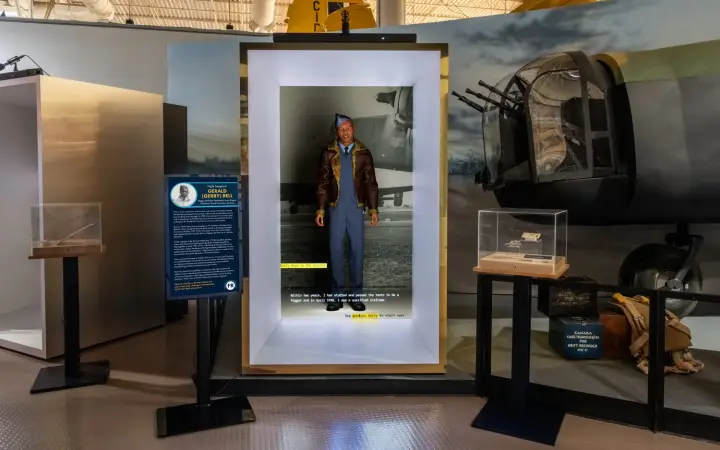
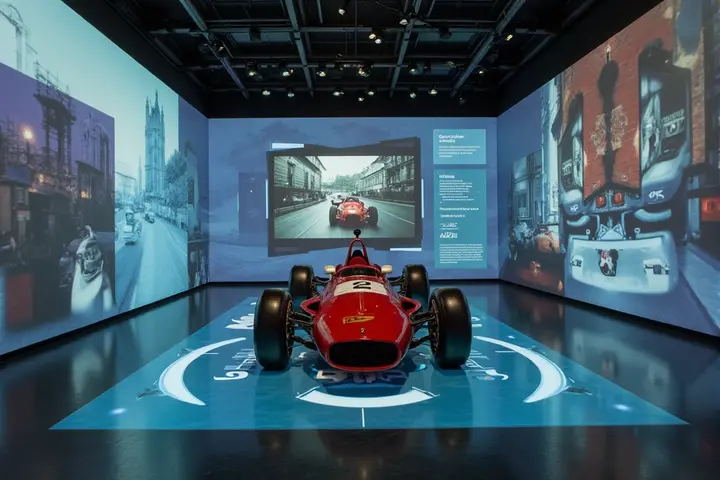
Christopher Quine. 25+ years of creative collaboration with museums, studios and research teams: life-size talking MetaHumans for the Canadian Warplane Heritage Museum, exhibits for Rockheim in Oslo, a multiplayer installation at World Expo 2005. Eight years leading Digital Design at Vancouver Film School.

scroll

Fig. 01 · how an image arrives

Every generated image on this site starts as random noise and is resolved, step by step, by a model running on my own machine. This one finishes as you scroll. The settings underneath are the real ones, read from the file.

“portrait of felt molecules mounted to cabin wall. dynamic lighting. glowing”
0
years of exhibits and installations
0
countries installed: Canada, US, UK, France, Norway, Japan
0
years leading Digital Design at Vancouver Film School
0GB
of models on local drives
0
LoRAs in the library
0
saved workflows
01 · What I do

Many disciplines,
one person

Each one links to the work that shows it.

01

Characters

From first sketch to a life-size MetaHuman that talks, voice and face included.

Making Freedom Fly →
02

Environments

Real-time worlds, lighting and exhibit design, installed in six countries on three continents.

Pixelated Portals →
03

Pipelines

A traditional design stack paired with an AI stack I run locally, and the tools that connect them.

The systems →
04

Design and direction

Graphic design is my foundation: identity, wayfinding and UX. I review everything and keep only the strongest, and I taught and led a design program for eight years.

Exhibit identity and wayfinding →The Column Auditions →
02 · Selected work

Made, installed,
lived in

Museum installs, digital characters and R&D series, each with how it was made. Explore them all in 3D →

  1. 01Making Freedom FlyWWII veterans, speaking in the voices they had during the war
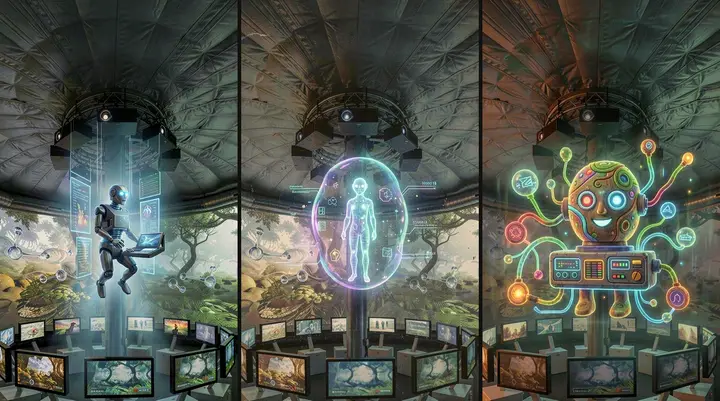
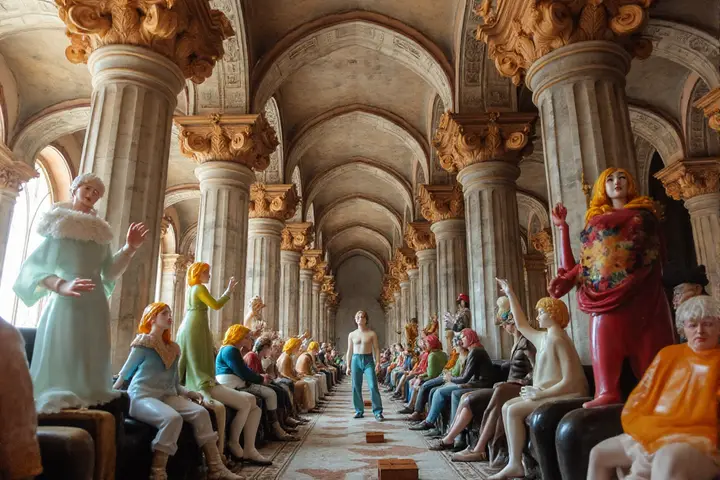
  2. 02The Column AuditionsTwelve hologram hosts try out for one interactive dome
  3. 03Pixelated PortalsInstallation concepts, generated from my own back catalogue
  4. 04Open-Source 3D PBROne photo in, a textured 3D model out
  5. 05Action FiguresImaginary 1970s toys, boxed and carded
  6. 06Other WorldsCorridors of figures, repeated until they became a place
  7. 07AI CrucibleThe failures it took to get the handful that worked
03 · The library

730 GB of models,
all of them local

Every block is a model folder on the workstation, sized by weight on disk. Hover for detail.

  1. Diffusion models190.1 GB
  2. Local LLMs107.5 GB
  3. Text encoders85.0 GB
  4. CLIP63.5 GB
  5. Video: LTX-2.5, MiniMax H359.0 GB
  6. Checkpoints49.7 GB
  7. LoRAs48.7 GB
  8. SeedVR2 video upscaling33.2 GB
  9. Image: Krea 2, Qwen Image 2.119.0 GB
  10. SAM 3 segmentation15.1 GB
  11. + 13 smaller folders
SoundImage and videoLanguage3D, characters, real time 
04 · The elements

A periodic table
of the stack

A traditional design stack on the left, a contemporary AI stack beside it. Everything here is installed, wired together and used on real work. Select an element.

Design stack
Image
Video
Voice
Language
3D
Real time
05 · Systems

Pipelines that talk,
sing and listen

Marchivum, Mannheim · 2025

A historical figure you can talk to

Visitors ask Carlo Schmid a question out loud. He answers in his own cloned voice, from the archive's documents, with a face animated by the audio. Every model runs locally, on one machine.

~1.2 s
average response
256 / 64
token chunks / overlap
0
cloud calls
  1. 01Visitor speaksmicrophone
  2. 02Whisperspeech to text
  3. 03Hybrid retrievalFAISS 70% + BM25 30% over OCR'd archive documents
  4. 04Mistrallocal LLM, in character
  5. 05XTTS v2cloned voice, streamed sentence by sentence
  6. 06Audio2Facelip-sync and expression from the audio
  7. 07MetaHumanrendered live in Unreal Engine 5
Making Freedom Fly · 2023–24

Giving veterans back their younger voices

Each voice is split into separate envelopes, re-aged one at a time, then trained on a blend of the original and the re-aged audio so it still sounds like the same person.

60 min
of source audio each
< 2 s
to generate a line
10–100×
less data than standard training
  1. 0160 minutesof each veteran, recorded now
  2. 02Envelope splitpitch · timbre · formants · phonetics
  3. 03Per-envelope modulationweights tuned until the artifacts go
  4. 04Blended trainingoriginal + re-aged audio
  5. 05Real-time voiceunder two seconds per line
Avatar chat · 2026

A voice avatar that lives in the browser

Speak, and an abstract avatar listens, thinks and answers out loud, its surface driven by the frequencies of its own voice. The whole loop fits in a third of the GPU.

1.4–2.5 s
speech to first reply
8.5 GB
of 24 GB VRAM
3
local servers
Whisper 3 GBLlama 3.1 8B 5 GBKokoro 0.5 GBfree 15.5 GB of 24
  1. 01MicrophoneAudioWorklet, 16 kHz
  2. 02faster-whisperlarge-v3-turbo on CUDA
  3. 03Llama 3.1 8Bvia Ollama, streaming
  4. 04Kokoro82M-parameter TTS
  5. 05FFTbass · mid · high bands
  6. 06Three.js avatarshader orb + 3,000 particles
06 · Every image carries its recipe

A quine produces
itself as output

ComfyUI writes the full workflow into every image it saves. These graphs were read straight out of the portfolio images on this site. LoRA and source names are withheld.

Painted amplifiers

Painted amplifiers

Two in-house LoRAs, one trained on my dad's paintings, steering a ControlNet pass.

Model
flux1-dev
Steps
20 · dpmpp_2m
Nodes
14
LoRAs

+ framed oil painting of vintage amplifiers, speakers and cables

− boring

Diffusion modelflux1-devVAEaeSampler20 steps · dpmpp_2m · cfg Empty latentEmptyLatentImageDecodeVAEDecodeSaveSaveImageText encoderst5xxl_fp8_e4m3fn + clip_lPromptCLIPTextEncodePromptCLIPTextEncodeSource imageLoadImageScaleImageScaleLoRAstrength 0.80LoRAstrength 1.10
07 · Output

Made on the machine

Carlo SchmidMetaHuman + Audio2Face
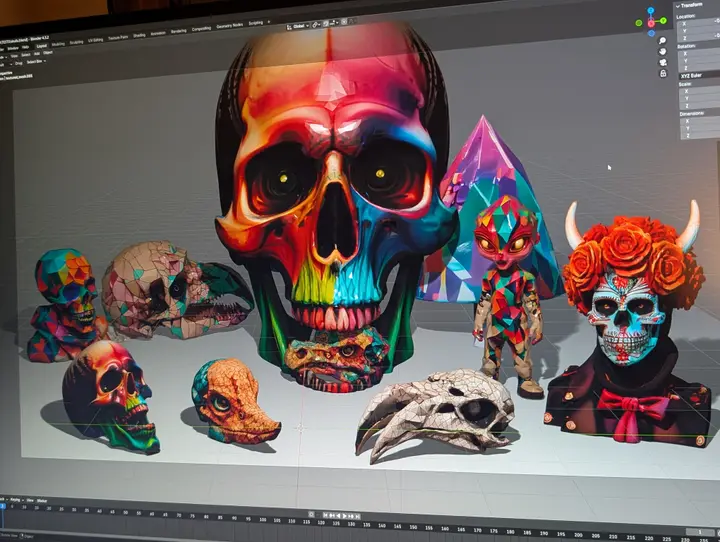
SkullsImage to 3D, lit in Blender
Don't feed the animalsImage to video
Immersive roomA LoRA of my face, projected into a space
GTOFrame-by-frame generation
Boy in a boxLTX Video
BananasImage to video
Self, drawnStyle transfer on my likeness
Self, paintedStyle transfer on my likeness
PixelCharacter animation
Behind CarloAudio2Face into Unreal, live
08 · Four years

Dated from
the project files

2023202420252026
  1. Voice de-aging R&D begins
  2. TouchDesigner wired to ComfyUI
  3. Voice de-aging done: 60 min in, under 2 s out
  4. Diffusion running inside TouchDesigner
  5. Flux LoRAs trained on my own face
  6. LoRA training sets; audio-driven MetaHuman animation
  7. Carlo v1: Whisper, RAG, XTTS v2, Audio2Face
  8. Carlo walkthrough and promo films
  9. StreamDiffusion in TouchDesigner
  10. RVC voice conversion; Unreal 5.7 audio-driven faces
  11. Avatar chat in the browser; live webcam splats
  12. LTX-2.5, MiniMax H3, Krea 2, SAM 3D and SeedVR2 in the pipeline
09 · Why local

Nothing leaves
the room

01

Your material stays in the building

A museum's collection, a studio's unreleased frames and character designs: none of it has to leave your own network to be worked on.

02

Installations outlive APIs

An exhibit has to run for years. No service shutdowns, rate limits or price changes.

03

Voices and faces stay private

Clones of real people are trained and run on hardware I control, and never uploaded.

04

Everything is tunable

Custom LoRAs, node packs and compiled engines, not whatever a vendor ships this month.

10 · Contact

Characters to cast, rooms to build, pipelines to fix?

Open to studio roles and collaborations: character and environment design, art direction, and pipeline R&D for studios, museums and live experiences. Based in Vancouver, BC. Open to remote.

© 2026 quineFX · Christopher QuineVisual design and UX: me. Code: Claude.A quine produces itself as output. So does this work.